
Democratising autonomy.
Multi-robot · Multi-modal · Multi-industry
The next decade belongs to fleets that perceive, move, and coordinate. Deploying them today requires armies of specialists coordinating individual systems, months of integration work, and infrastructure only the largest organisations can afford.
We are changing that. AI is the great equaliser, and we are building the tools that let operators design, simulate, and deploy 24/7 autonomous aerial missions across critical industries.

What you are seeing
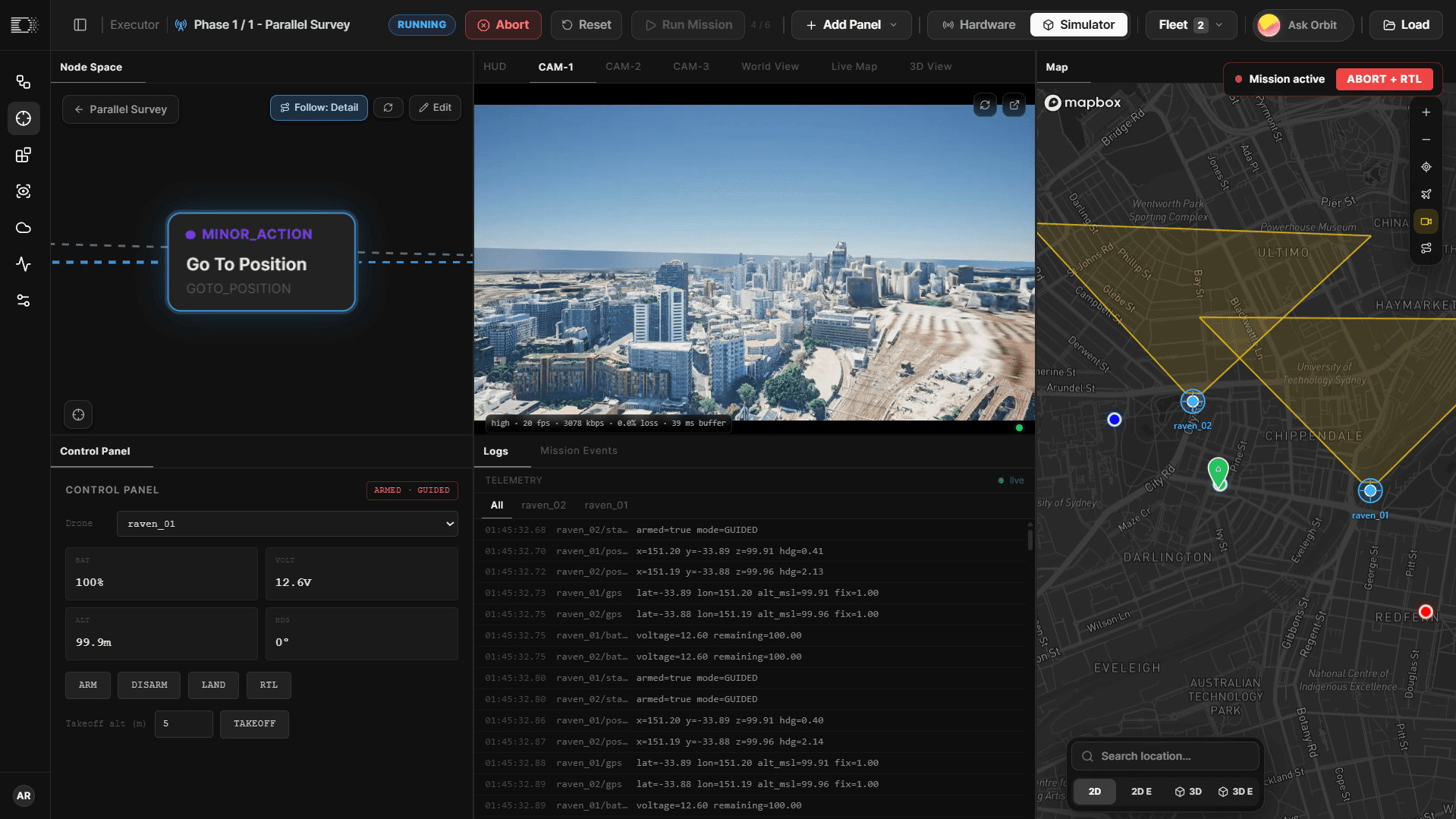
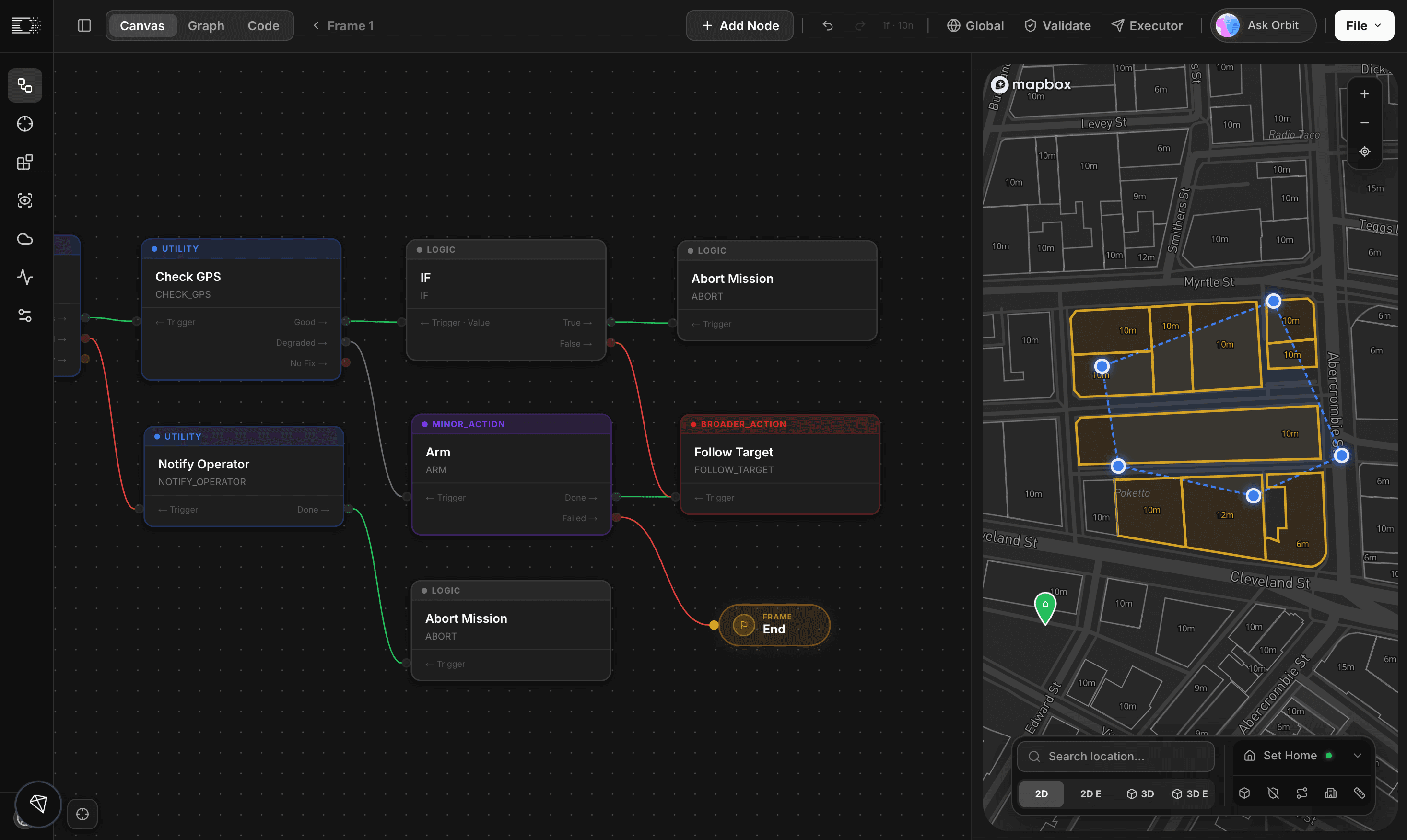
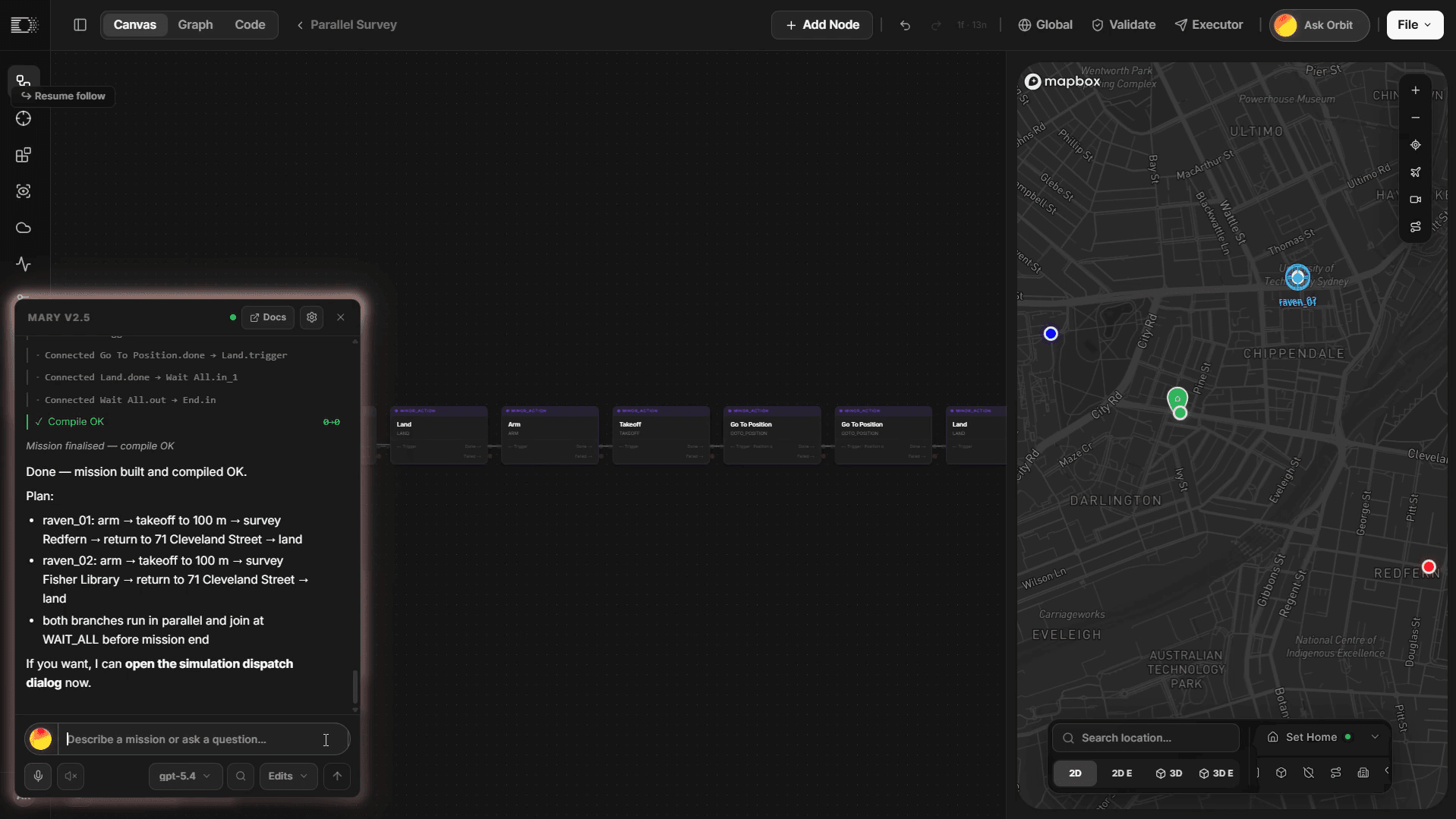
Two Ravens flying one graph. The graph is the mission, with no compile step and no second script. Nodes light up as each drone reaches its waypoint, collision avoidance holds them apart, and camera, map, and telemetry all watch the same flight.
Why it matters
Nothing here is a mockup. It is the same ArduPilot the airframe runs, telemetry off the live bus, abort that halts a climb mid-air, and every run recorded so it can be replayed frame for frame. Six demos stitched together cannot do that.
What exists today
Orbit running end to end in simulation, on the same flight stack the real drone runs
Raven-1 early prototype built and hardware-tested
Orion mesh board in active design
What we're building
Orbit
Mission intelligence for autonomous systems. Design, coordinate, and deploy complex multi-robot operations through a visual mission editor. Orbit uses AI to translate high-level intent into precise mission logic. Tell it what you need. It handles the rest. From a single drone to a coordinated swarm, operators of any skill level can build sophisticated missions in minutes.
Raven-1
The reference platform for Orbit. Sub-250g and built on ArduPilot. Raven-1 ships ready to run Orbit missions out of the box. Where most enterprise drones are locked to proprietary ecosystems, Raven-1 is open, field-repairable, and works anywhere Orbit does.
Orion
The Constellation project. Persistent, long-range mesh connectivity, real-time telemetry relay, and multi-node coordination across distributed Raven-1 deployments, for places where LTE, Wi-Fi, and centralised infrastructure are not enough. Orion is the backbone that turns a fleet of drones into a single coherent system. More soon.
Cloud offloading
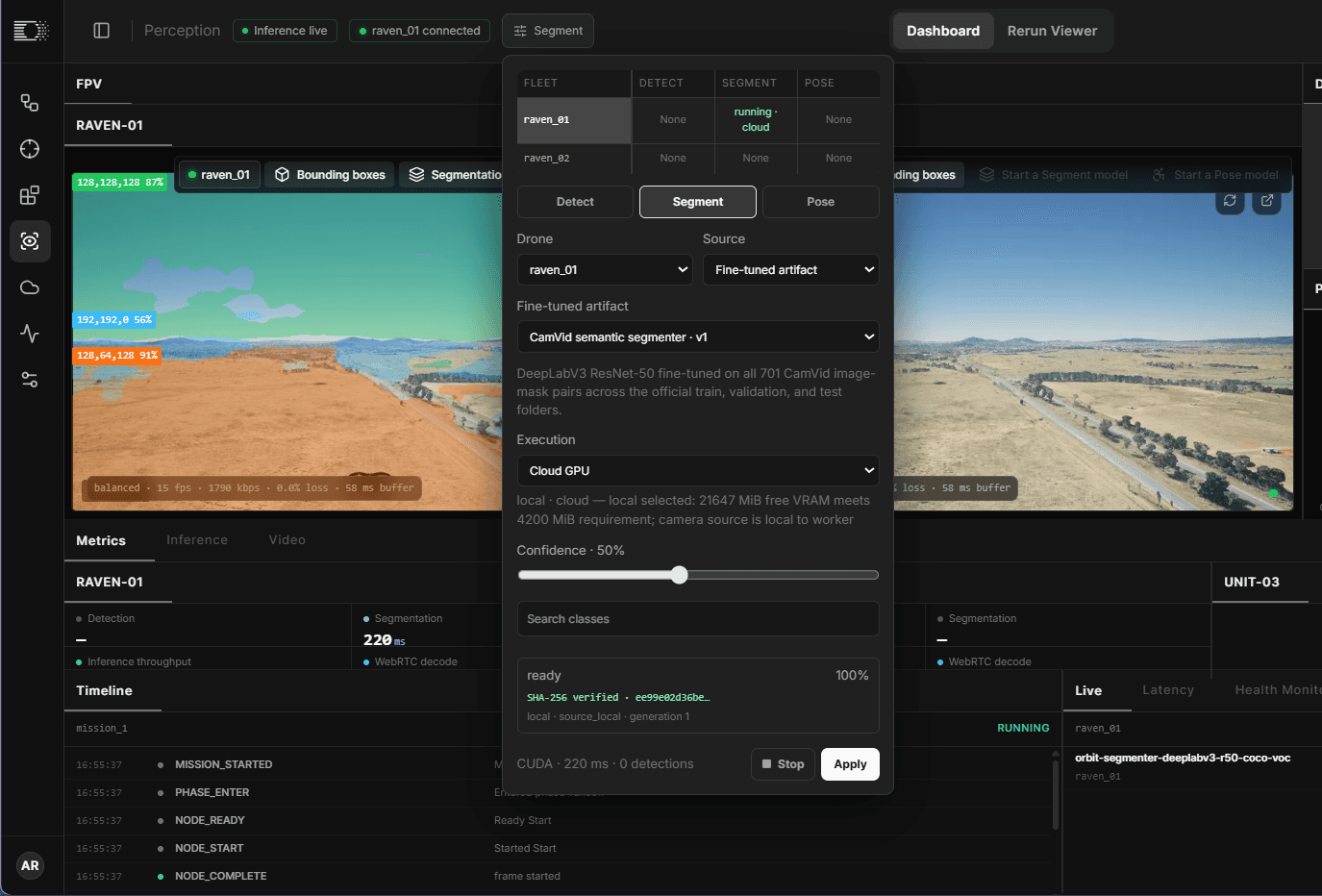
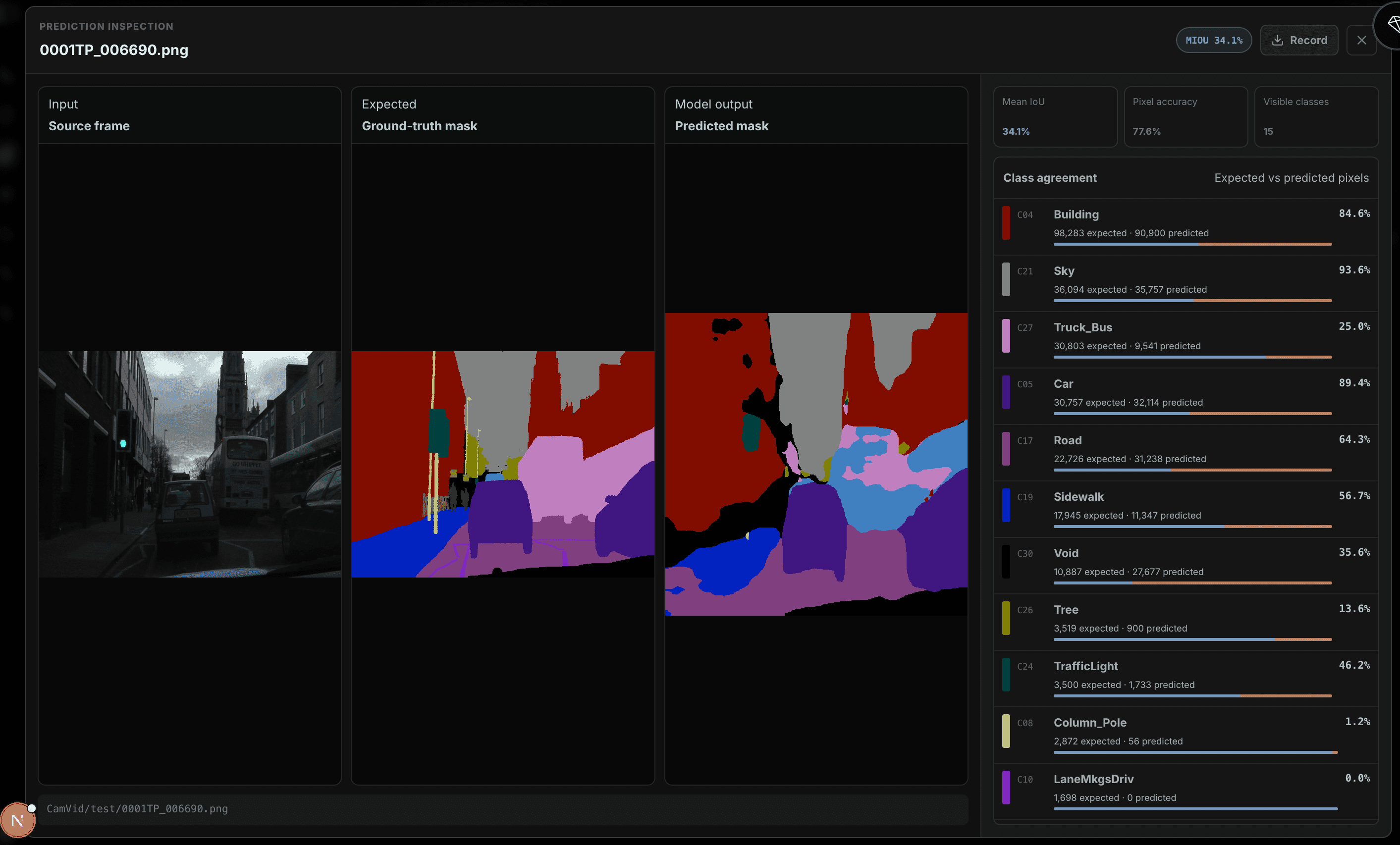
The heavy work does not run on the aircraft. Computer vision, 3D mapping, and mission intelligence run in the cloud and stream back on demand, so a 250g drone and a laptop get capability the airframe could never carry.
Our work
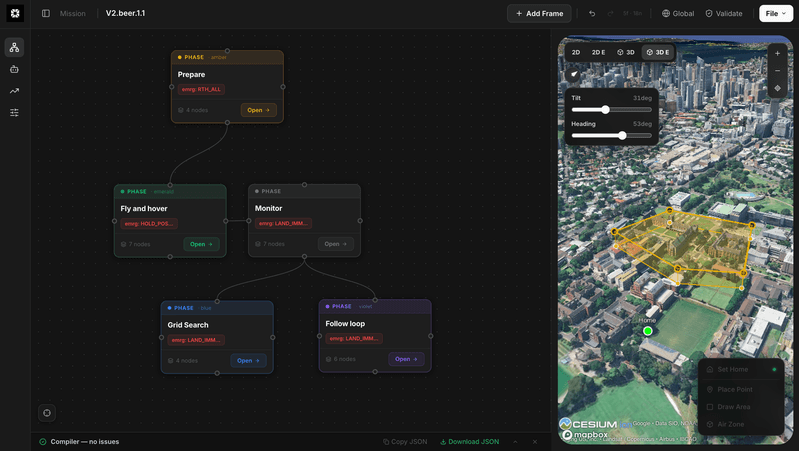
Orbit planner
3D mission design
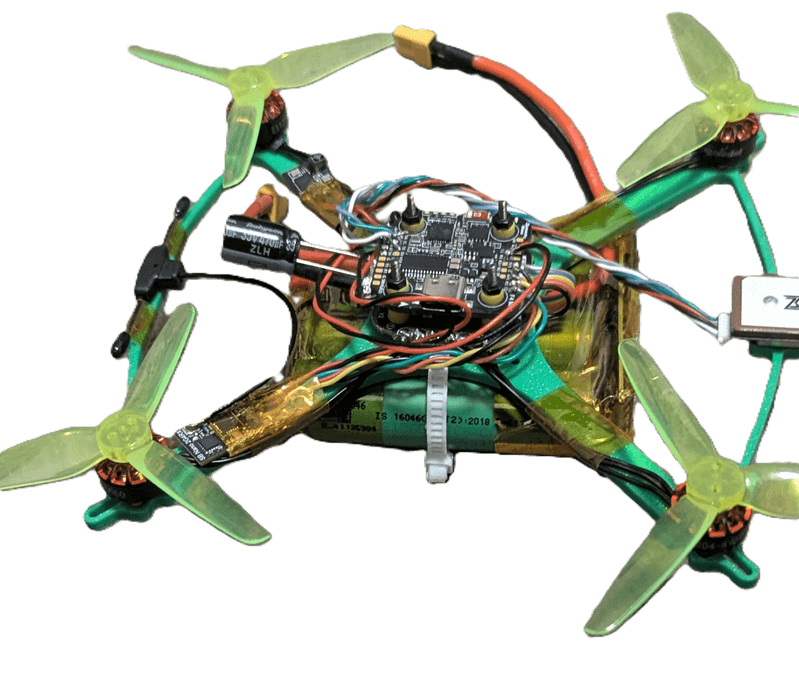
Raven-1
hardware prototype
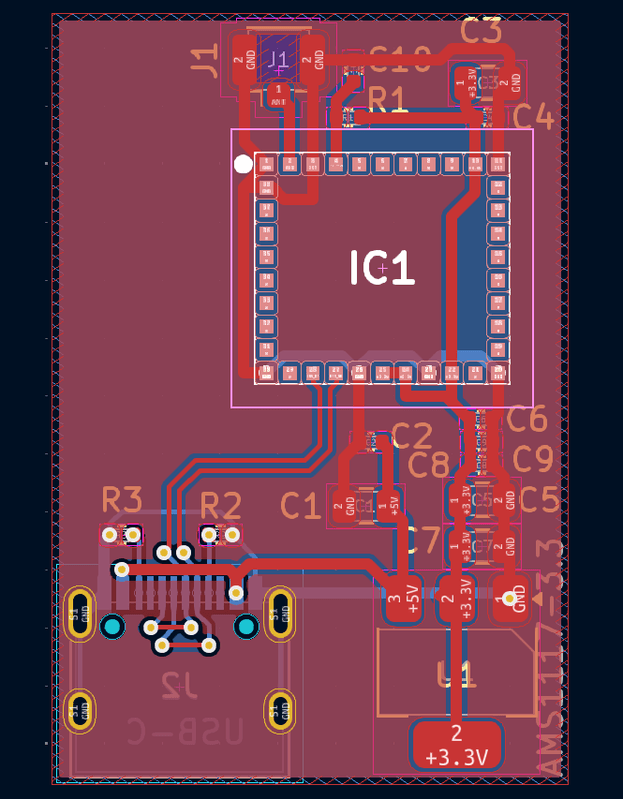
Orion
mesh board design
Next
The next milestone is moving the same workflow outside the lab: Raven-1 v1 field tests, Orion two-node mesh validation, and the first full-stack hardware plus software demo.
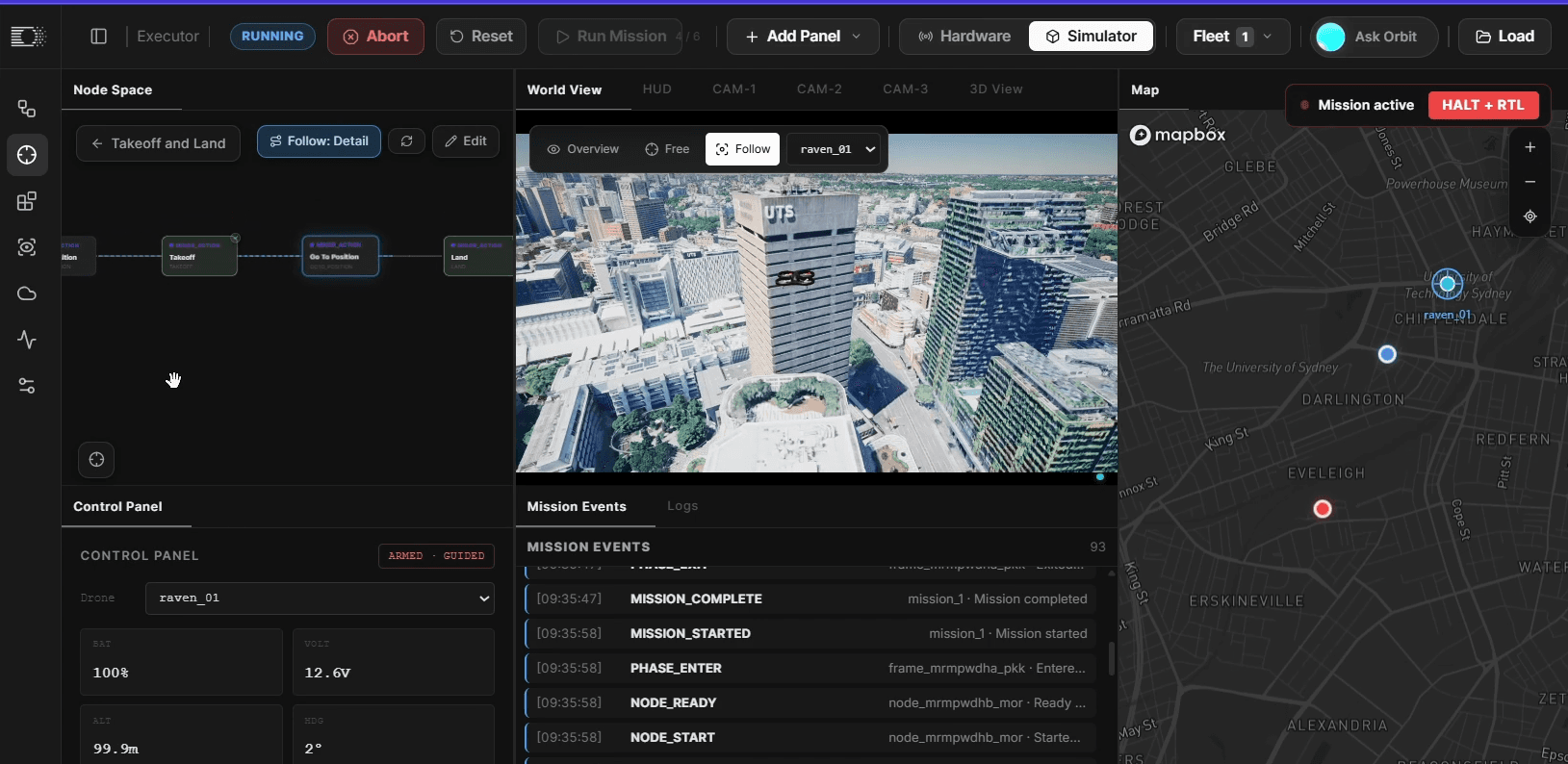
One operator surface
Graph, live camera, telemetry, and map on one screen. The video is WebRTC straight off the cloud simulator, and abort stays armed for the whole run.
Next field target
This quarter: Raven-1 v1 flying a real field mission, and the first design partners. After that: Orion two-node mesh validated and the first paying pilot.
Roadmap
01 Core software
doneOrbit runs end to end in simulation: planner to executor, with video, telemetry, and perception feeding back into the graph.
02 Raise
nowA pre-seed round to take Raven-1 and Orion from prototypes into products, and to put the first operators on the platform.
03 First pilots
nextDesign partners flying real missions outside the lab, the full stack running on hardware, and the first operator paying to use it.
04 Hardware and scale
nextRaven-1 v1 field tested, Orion mesh validated across nodes, and the vehicle and the platform sold as one thing.
Stay close
We are building in Sydney and testing fast. Every post we publish goes out to this list: engineering notes with real numbers, and where the company is actually up to. Pick what you want to hear about.